
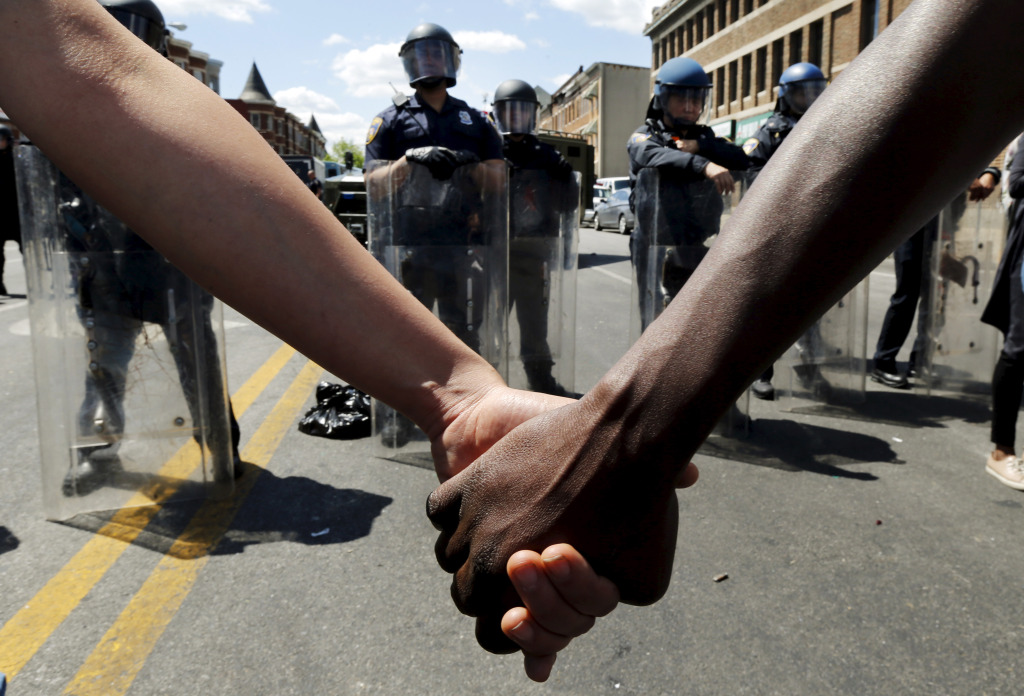
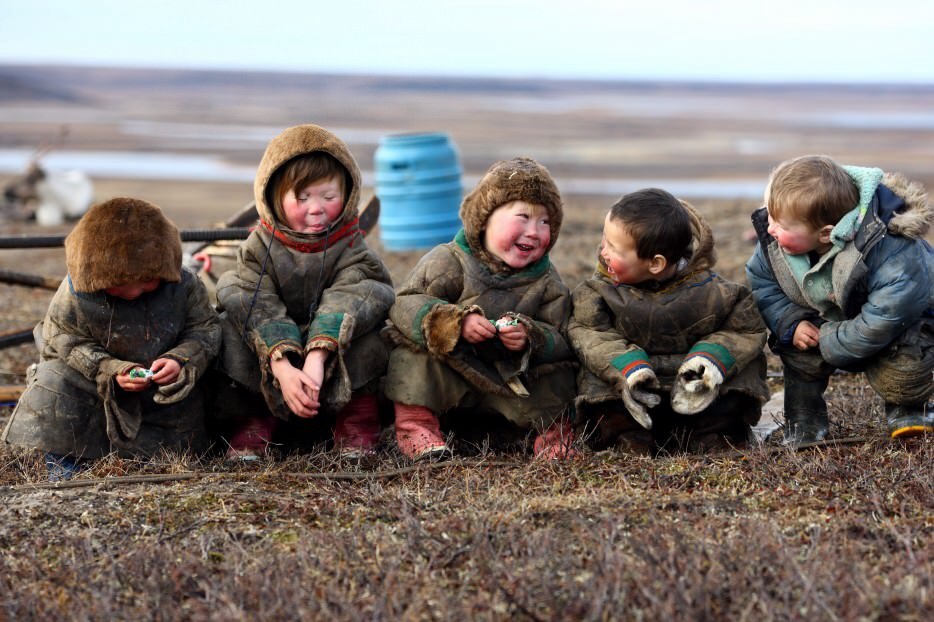
I have been thinking all day about this idea, suggested by many people today, that Paris (or for that matter New York) is ‘close to us’. “Us” can be English, Hungarian, Italian or ‘European’ people as such (whatever this term is meant to imply nowadays). “Close” is used to refer to either to physical proximity, or it is used in a symbolic way. There is also a hidden assumption, that societies, cultures created by white people wherever in the world (and at whatever cost), would be essentially the same, and people living there, somehow belonged to each other. (E.g. Australia and France sharing more than Kenya and Ireland). As the victims of 9/11 and the Paris attacks included non-white people, there may be another hidden assumption, that non-white people living in the US or in Europe become almost like white people, their life (when murdered by certain enemies) can be measured in the same way as white people’s lives, as ‘we’ (white people) can feel close to them. (Not sure if the same applies when black people are murdered by white police in their own country, e.g. in the US). The hidden idea is that the 149 students who were murdered on Thursday in Kenya are ‘too far away”, so we can not feel the same for their death as for the death of a similar number of people murdered in Paris, as Paris ‘is close’. Kenya is ‘too far’. Although some of the victims in Paris could have been easily emigrants from Africa, even from Kenya, but because Paris ‘is close’ we mourn their death too. It happened in Europe, so it is ‘shocking’ for Europeans. Death happening elsewhere is ‘too far’ so we don’t mourn (of course with the exception of 9/11). The (perhaps hidden) assumption is, that if murdered people have similar type of life-styles to my own life-style, than I should be able to feel their pain, to mourn their death more easily, then the pain or death of people, who are ‘different’ from myself. I think what we are talking about is our ability to identify with the victims. It is assumed, that me, living in Europe, can naturally identify with the victims in Paris (and in New York), but not with the victims in Kenya, Somalia, Mexico or Pakistan. If I identify with the murdered victim, I imagine myself being the victim: an internal scream may let lose, shouting “it could be me!”. In contrast, if I am unable to identify with the victim, if identification assumed to follow continental, plus ethnic and racial divisions, then I won’t think of myself when I see a picture of a murdered black student in Kenya if I happened to have pink skin colour. The assumption is, that I would unconsciously think, it could NOT be me, so I won’t feel the same shock, bereavement and natural sorrow. In other words, me, living in England, would FEEL SORRY FOR MYSELF when I think about the Paris (or New York) victims, but would not feel sorry for myself when I see the victims in Kenya. I wonder how the Black, Asian, Arab, South American, Roma and mixed population of Europe is expected to fit into this scheme. Certain authorities and people regularly provoke groups of non-white people in Europe to express their ‘loyalty’ through expressing condemnation of the killing of white people. They are often expected to prove they have ‘integrated’ by showing shock and bereavement about the death of white people. If they don’t do it, it is sometimes assumed, that they are somehow guilty of the murder. This is intensified when Muslim people living in Europe are expected ‘to fight terrorism’, ‘fight fundamentalism’, to successfully influence their youngsters not to become jihadists, and to make statements after statements to condemn ISIS. One condemnation is not enough, they are expected to do it each time white people are killed. Otherwise they may be treated as suspects. Of course nothing like this happens when Christians go out to murder a number of kids, or Church-goers or whoever. No Christian Church is expected to condemn these murders which are seen as the product of lunacy, they are not suspected of being guilty by sharing the same religion. Which happens all the time with (against) Muslim people. Going back to my original topic, I would like to say, here, publicly, that if I look deep into myself, which I did today, I have to admit, that sadly, I do feel the joy and pain of those people stronger, who appear more similar to me. I also feel the tragedy of their death stronger too. I can ‘sense’ much more precisely the life of those who look similar to me, who eat, love, dress, work, raise children etc in a way I am familiar with. It is also true, I admit, that their death shocks me more, than the death of people who appear to be very different, whose life and customs and believes and rules I don’t understand. However all my life I challenged this tendency inside myself, even as a child. I had different words to describe it, but in my nursery and school I made an effort to try to get to know those kids who were disliked by the teachers or bullied by other kids. These bullied kids often came from really poor background, sometimes were unable to study, focus etc, and it would have been easy to join in the popular dislike, ridicule them and see them as ‘strange’, as ‘the other’, the one whose pain does not count. The one who helps the rest of the class to unite, to feel expected because we together we hate him or her. Occasionally, I found myself letting down this kid, joining in with the crowd, but I knew I was wrong, and I changed my behaviour. I still remember these incidents when I felt I betrayed that child, I betrayed my own principles. I don’t think I talked about these things those days, and not even as an adult. Today is the first day I can put some of these things in words. As an adult, especially since I moved to England, I have found it easy to ‘identify with’ many people who could superficially be seen as very different from me, whose language and customs I could not understand initially, who follow rules I may not like, who have religious beliefs I don’t share. I often try to look for some similarity, something we have in common, even though we may even dislike each other. I believe, it is my task to see the humanity in those people who may first appear ‘strange’ for me, and to stop automatically identifying with those people who come from my country, or my continent, or have the same pink skin colour as me, or who are also atheist, or share my feminist ideals, my questionable class and social status, my attitude of hating money and authority. I want to be able to feel the joy and pain of anyone in the whole world. The more different they seem to be, the more puzzling their being is, the more important it is for me to find our connection. To connect, to relate. I think the ‘global’ task is not the world-wide exploitation of oil, but the potential ability to see the human in everyone, even in those people who we don’t understand, those people who seem to share nothing with us, and even in those people, who may first consider to be ‘enemy’ – whatever this over-loaded term may or may not mean, today, on the 14th of November, 2015. Good bye, thanks you for reading, comments welcome.
 Piroska Markus Reflections