Do we choose our illnesses?

When I was an anarchist-punk-looking-atheist-feminist teenager, I started to attend the sermons of a priest. The audience mainly consisted of 60-90 years old women, a few elderly men of similar age – and the three of us, 16 years old girls. I did not become religious, I had no intention to turn to the Church for salvation. I went, simply, because a very good friend recommended that this particular priest – as someone worth to listen to. His name was Jóska Farkas.

Having been born with a critical frame of mind, I found very few people in my life I wanted to listen to – but I immediately realised it was worth listening to Jóska Farkas. His sermons were more like lectures, examining a different topic every Sunday morning. The venue was a simple hall in an ordinary building. There were about 200 people in the audience, and you could hardly find an empty chair.

The very first time I went to his sermons-lectures he talked about the misery money brings, and somehow he moved to the topic of illness. He said – and I had never heard this idea before in my life – that “we were responsible for our illnesses”.

I felt shocked and first I just wanted to disprove him. He did not say much about the subject, but I became pre-occupied with trying to find reasons why may be right or wrong. Initially I felt angry with him, feeling he was blaming the innocent victims of illnesses. At the same time I sensed that his ideas represented another level of reflection, which I wanted to understand. I knew he did not mean to blame, instead he wanted to wake up a total sense of responsibility for our life. This was a new challenge for me.

A few years later I started to take a Hungarian version of the contraception pill, which had heavy side-effects. First it stopped my period for several months, then I started to bleed continuously for about six months. The doctors claimed there was nothing wrong with the pill, but when I discontinued taking it the problems disappeared. During the months when I was continuously bleeding I had a feeling that I “wanted” to bleed. I was in a relationship with a man whom I did not really like. I realised, my constant bleeding problems was useful, and with the real excuse of the bleeding I could avoid his daily advances. I was suspicious of this thinking, but the idea was playing in my head, although I think I have never mentioned it to anyone those days.

After I emigrated to England in 1978 I visited several communes, searching for one I could move into. I discovered a commune, which was established on the West Coast of Ireland in the beautiful and wild Donegal. I read a few books by people who moved there, and later I visited them. This commune called Atlantis, was led by two sisters. In a biographical book written by one of them, I found a letter she wrote years earlier. She mentioned on-going menstrual bleeding – which she interpreted as a protest against her terrible marriage. She said that doctors tried every method to stop it, which were often potentially dangerous. She finally decided that enough was enough from the medical profession. She started to heal herself, and I remember her words: “I will do it in my own way”. It worked. I had no idea what “her own way was” – but I could feel the determination, which, for sure, can lead to recovery. She left her husband, joined the commune, and soon became a flowering and assertive woman. She looked very happy and healthy when I met her years later.

I also had an American hippie friend who used to live in London in the 80’s. He used to visit me bringing me large bags of brown rice and chickpeas, in his attempt to turn me into a vegetarian. He told me his mother had cancer. One day he received a letter from her. She wrote to him that she still had not recovered from her cancer, because, she wrote: she “realised she still had some interest in being ill”.

Later on in my Social Work and Social Policy MSc studies at the LSE I learned about the ‘sick role’. A role which society can force on people, but people can also chose to have, even when they have recovered from an illness. In the professional literature the question has been raised whether people with mental health problems “should have” the ‘sick role’, and whether it would lead to privileges they “do not deserve”. Or whether it is a useful role enabling them to take it easy as a sick person should, at the same time forcing them to think about themselves as “needing” treatment, needing doctors to make them feel better. We also learned about the ‘impaired role’ – which is a bit like a disability, it is not sickness because it might be permanent, it refers to a lack of ability to function as average ‘normal’ people do. The University course encouraged us Social Work students, to perceive our clients (who had mental health problems) as fitting into this ‘impaired role’ category. The so called ‘normalisation theory’ prescribes, that you aim to achieve an acceptance of this ‘impaired role’, but you try to offer for the ‘impaired’ people as ‘normal’ life-style as possible. For example average housing, training, jobs, entertainment. No segregation and no large institutions, no asylums and no specialist training establishment. ‘Integration’ while respecting their ‘difference’. For example a Carer with this attitude would encourage the ‘patient’ to take up adult education courses, studying together with the ‘normal’ people, but perhaps offering extra support. However, the same Carers would be expected to ensure that the people with mental health problems take their medication, see the psychiatrists. Any attempt to discontinue with the mediation or avoidance of seeing the ‘mental health professionals’ would be interpreted as ‘lack of insight’ and perhaps a sign of the psychiatric illness itself. “Choosing to be be mad, instead of wanting to become normal”.

I always suspected that the above taught-learnt categories were not only patronising, but they were based on superficial thinking. The acceptable and fashionable terminology makes our thinking shallow.

The whole question of “Do we choose our illnesses?” – raises other questions:

What do we mean by ‘choice’ in the first place?

How do our choices relate to our ‘free will’?

What is the relationship of our consciousness and the unconscious choices/decisions?

If it is true that a psychological need inside us, which we are NOT conscious of, makes us ‘choose’ to become ill – then should we call it a ‘choice’? Is it a choice if the process is more like a determining need forcing something on us, which we can’t fight as we are not even aware of? We have no ‘free will’ to fight it, or to agree to it. So, if it is a sub-conscious psychological need (e.g. the suppressed desire to be looked after) which forces us to develop a certain illness, then we can’t say we choose it, we can’t argue that we are responsible for the illness, or that consciously we could stop being ill.

Believers of the psycho-dynamic thinking might argue that once those unconscious wishes have been made conscious (have been ‘interpreted’), the need for the illness might disappear. So we could say, that our psyche ‘chooses’ the illness, or leads to the physical organism to become sick, but not ‘us’, not our conscious self.

The question still remains, why some of us have asthma, others have flu, ear-ache, a measles, eczema, cancer, ulcer or migraine? – Why this illness and not another?

Apart from straightforward biological or genetic explanation, there is also a way to see the illness as a symbol. For example, years ago I had a mysterious illness, which attacked my feet. When I began to think about the reasons and the ‘meaning’ of the condition, I started to play with the idea of my illness symbolising my general life-problem of that time: I wanted to stand on my own feet, but I could not. I was living with a man, who did not let me to be independent and I started to depend on him against my wishes. – This might be far-fetched, but not completely impossible. I also always had a feeling, that I would never develop cancer, because, I believe (I don’t know on what basis) that people who develop cancer are unable to express their anger. They bottle up their negative feelings and somehow this creates the cancer. And I do know how to express anger.

So, my priest was not right. Neither my lecturers at LSE, who only managed to conceptualise a banality any school child knows, who wants to avoid the exam day in school. They develop ‘sick-role’. In my opinion when they talk about the ‘impaired’ model they are just expressing their pessimism about people who have mental health problems. Perhaps because, as professionals they don’t want to admit that they don’t have a clue how to help these people! So they think about them as ‘in-curable’! How do they dare!

However much we might ‘benefit’ from the ‘sick-role’, we also have so much to loose whenever we become really ill. So it can not be in our real interest to become, and especially to stay ill on the long run. If someone has a depressive mentality and they are giving up on living, then perhaps, it is natural if they become ill and they don’t wish to recover. I am certain, that if not the first development of illness, but the maintenance of it, is very often in our hands, and it depends to large degree on our will-power, our mentality, our general life-energy. And on our libido. No one with a healthy libido want to stay ill for a long time. People who really want to live, and live fully, will do everything to recover, and their own positive vibes will help with their own recovery. More than that, they will have a positive and healthy effect on their environment.

If it is possible that we are not responsible for our illnesses, then we could try some religious arguments. Perhaps God makes us ill. As a punishment for our sins. The problem is, that I am still not religious and I don’t believe in God. However I do believe in Fate. I also believe that nothing is accidental. I don’t know if God, or Fate, or Nature is punishing anyone through throwing an illness at the person, but I think that sometimes illness does have some connection with punishment. People can punish themselves, and can try to punish their loved ones through illness. “I have been smoking so I had been punished with lung-cancer”; “I have been over-eating, so I only deserve that I became sick” – I have heard these kind of statements many times. I have also seen people THROW the fact of an illness against someone whom they ‘love’: “you bastard, can’t you see that I am ill!” As if it deserved respect and gave you rights, so it becomes a weapon to hit a partner’s head with. If you don’t feel pathetic because of your illness, you might as well feel superior, proud, and put other people in their place, because they lack the special status of: “I have diabetics”, “I have ulcer”, “I have cancer”, “I have HIV”…

The more fatal the illness is perceived, the more it can be used as a weapon to make demands. It is difficult to make demands with obscure or complicated illnesses when the person feels very unwell, but the doctors are unable to give a diagnoses. These people suffer from the uncertainty about the nature of their illness, plus the lack of social recognition. They may be very ill, but society is not giving them the sick-role and the automatic privileges which sick people often get.

There are “respectable” illnesses in any given society, and respectable treatment methods, and the two need to be synchronized. If someone with HIV only goes to a Herbalist, some may turn against them and believe that they are responsible for the continuation of their illness, and they are irresponsible ultimately. The original sympathy may turn to hostility.

Although I am not religious (I keep saying), however, during the last few decades several events happened, which made me think that someone or something (Fate?) is playing games with us. A few people I know and deeply respect had been made ill by this “Fate”.

My hypothesis is that these people “are being put on a trial”. These people are very special. They are not the depressed type, they are the type who want to live, who are full with life-energy, they are beautiful, attractive people. Some other people I know who also have a very healthy and life-giving side to them were born with severe disabilities, or as children developed chronic problems. Despite their disability or serious illness they radiate life-energy.

The biggest shock was when I discovered what happened to M. I met her at college in 1989 when she was about 24 years old. At first I slightly disliked her because she was blond and just too beautiful. I think I was simply jealous of her. It took me a week to realise that I always agreed with the things she said (a rare experience) and that I generally liked her. She told us she loved travelling and she had already been to Africa and to other parts of the world, but still there were many other countries she wanted to go to. Later when she went to the States, she accidentally turned up in a gathering of Indians who welcomed her, and even asked her to speak. I kept in touch with M. and used to visit her regularly. A few years later I phoned her sister, telling her that M. had not answered the phone for weeks. Her sister asked me to sit down while she was telling me the news: M. was paralysed, from chest down. She told me, no doctors could explain the reason, but they thought a mysterious virus attacked her – although no one else in her environment got ill apart from her. The doctors thought she had no chance of ever starting to walk again. Soon afterwards I visited M. in a specialist spine-injury hospital, where she seemed to be in good spirit. She told me at the beginning she was very depressed, but now she was ready to face life. That time, for several personal reasons I was in a depressed mood. When I saw M. smiling in the hospital I felt so ashamed for my depression. Just a few months after becoming paralysed she was already in a positive emotional state. She was lovely, bright and joking, while I looked miserable, although I had no comparable problems in my life. She was still giving so much warm and love to several people around her, I had to admit to myself, she gave me energy, and I felt it should have been the other way round. Later she was given a ground-floor flat which was adopted to a wheelchair. She made the flat beautiful in no time, bright, colourful and cosy. She started to play basketball; organised a dance-theatre in which she was also performing. She also kept her part-time job in London, 100 miles away from her home-town, she drove up to London 2-3 times per week. Now she is working in a university nearer her home. Unfortunately she has not became better physically, but she never complains about her disability, and she has much more friends and a more active and constructive life than anyone else I have ever met.

A 75 years old woman from North England also surprised me when I met her a few years ago in the Union’s ‘Convalescence Home’. We were sitting at the same dinner table and we started to like each other from day one. She told me many funny stories from her life. She was taking the Mickey out of everyone – including myself. She told me, years earlier she started a ‘remittance’ group for the local elderly but she was getting bored with them because all they ever wanted to do was remembering the past, but she wanted to think about the future! One day I asked her what was the reason why she was coughing so badly. She told me she come from a small mining town and when she was young every child had some form of lung problem. No one noticed that she developed TB. As they did not treat it for long time, her lungs and spine collapsed to some degree – and she is very-very tiny! For the rest of her life she has to use an oxygen machine several times a day to help her breathing. The illness forced her to give up nursing at a young age. While she was talking, she did not express any sign of bitterness about what happened to her. She talked about her childhood illness with an understanding smile, trying to express that things were different those days, I should not be upset that her parents did not notice her illness.

I only mentioned women so far. I could continue the list and as I know much more women then men who have chronic illnesses or disabilities, and they still live a full life. They don’t want the ‘sick-role’. These women don’t expect much from others, but they give lots of warm, love, understanding. They are never patronising, they don’t play the superior. Luckily I I also know some men who are similar. They usually do not consider themselves good people, and often have very high expectations of themselves, demanding more and more from their own selves. Most importantly they have refused to play the victims, and they have refused to become rejects – the role society is offering for them.

While I was travelling in India I read an article about a very special Indian-origin doctor who lives in the US. He had two heart attacks and now he is in a wheelchair. He is unable to breath through his nose and has to breath through a tube inside his throat. Years ago he was told he only had a few months left to live unless he agrees to a heart surgery, which he refused (and now the doctor who suggested the surgery agrees with his decision). He is an experienced and fast eye-surgeon and is also a plastic surgeon. Despite his condition for several months, every single year he goes to India in order to perform hundreds of free operations for poor people, e.g. clearing deformities on the face, removing cataract from the eyes. He travels to isolated rural villages and performs his free operations in a tent he and his team takes with them. When back in the States he lives on his own, does his own cooking, cleaning and housework.

When I think about these people I start to feel angry with ‘fate’, would like to scream: “There is no justice, they did not ‘deserve’ the illness or disability!” However my scream means that deep down I feel some (other) people do “deserve” to become ill or disabled. I don’t like to admit this, but yes, it is implied. In my favourite childhood book the child-witch was throwing measles-spots on people she did not like. This is similar to the idea of cursing, which, perhaps is another possibility, but I don’t want to go that far. Just want to mention, that in my opinion, if someone (especially a child or a vulnerable adult) lives with others who are against her/him, who are constantly thinking negative thoughts about her/him, who do not like her/him, who wish bad things would happen to her/him, who ‘send negative energy’ towards this person even if they don’t consciously do it, who do not pay any positive attention or look after the needs of her/him – then this child or vulnerable adult might easily become ill.

So these people I talked about don’t ‘deserve’ to have any illnesses or disabilities – in the sense, that they are brilliant, positive people, who do not want to take advantage of the ‘sick role’, they do not want to have a half-dead life and they do everything to get better. There is no way I would accept that they were ‘responsible’ for their illnesses or disabilities. Ignoring my stupid suggestion about ‘cursing’, the only reasonable explanation I have: perhaps ‘Fate’ has put them through a ‘trial’.

A bit like Jesus, but no one will write stories about them in the Bible. Sometimes I think the stories about how Jesus was put through this and that trial – are nothing. Clearly the bible was written by men, who have never experienced the trials most women all over the world go through nearly everyday of their life, who generally have to face and solve more difficulties than men.

In some sense, both ordinary men and women have to face trials almost on a daily basis. Just bringing up children is a series of trials; on certain days not-spitting-into-the-face of a manager might be another trial. Living far away from people you love is another trial which especially immigrants and refugees have to face. Surviving the death of people close to you is tragic trial everyone has to face one day or another.

However, some people – and I believe they are very special people – have been put through more serious trials. People often ask, when something horrible happens to them: “WHY ME?” – And I am asking the question about these people: WHY THEM? I know that not everyone would cope with the difficulties, illnesses, disabilities they have. And they did not only survive these, they coped with their often life-threatening problems in an incredible positive way. At least they coped with some aspects of it positively, because if you ask them, they would have many complaints to make about their own selves. For example M. might tell you that she is still smoking so she is not looking after her health properly. The Indian doctor might think that he should have operated even more people.

I have this crazy feeling – that the illnesses and disabilities these people experience – were somehow ‘deliberately’ thrown at them, to see, if after coping with these, they could still be as good human beings as they were before. And they stood the test. If anything, they even became better. And perhaps that is the purpose of illnesses. To give a warning to people: life is precious, you have to respect it, and to live it as fully and as positively as possible. In whatever circumstances, with whatever body you have.

The crazy idea I am suggesting therefore is this: the real function of some of these serious illnesses (and disabilities) is to ensure, that some ‘chosen’ individuals suffer without becoming inhuman and selfish. And the rest of us learn from them.

If my theory has any truth in it and if this was also the case historically, then I could suggest that perhaps the Jesus myth was invented to illustrate it. It was perhaps the summary of experiences many people had. Almost all women, and some men. It would have made more sense to put a woman on the cross, it would have reflected past and present societies and individual life experiences better. However, the hero-cults are dedicated to men, so again, we were given a man to respect on the cross, as a victim. In fact, as a victim of other men, not of women.

They twisted the story several times. They claim it was the suffering which would safe humankind. They claim it is the feeling of guilt which would purify us. But I believe this is not the case. Although it is natural to feel unhappy when something tragic happens, I believe we need to refuse to base our life on suffering and guilt. If we can achieve this, there may be less sickness in the world.


Walking upstairs I was thinking

When I was coming home yesterday walking up the stairs, I was thinking, someone famous once said: “every society could be judged on the basis of how it treats women”. I suddenly thought: “Every society can be judged, from how it treats ‘mad’ people.”  Then my thinking jumped and I thought: “how it creates madness”.

And my (nearly) final conclusion was: “every society can be judged, from how it creates and treats it’s mad”.

Then I thought: feminists have rightly criticized the word ‘treat’ – and the idea, which is implied, that women are not part of the society. Because the original statement implies, that the society is male and women are external to it, some kind of ‘objects’ – to which the male-society relates: men ‘treat’ women.

There is already so much wrong expressed in these words. I always hated when men said “I treat my wife/girlfriend really well”. I usually have a feeling that they are talking about a dog, who should feel privileged. – All of these thoughts and ideas swam, or rather, rocketed through my head while I was making the steps upwards.

The next thought was: ‘judged’ is the wrong expression. I asked, who am I to judge? Or who are supposed to be the judges according to the original statement? Are they not part of the society? What makes them either outsiders or superior beings, above everyone else, and independent?

I concluded quickly: instead of ‘judged’ I could say: “Every society has it’s own typical way of ‘treating’ and creating it’s women and it’s mad.” Societies create role models for women and they use various methods to force the individual women to conform to these female images. Societies also create their own concepts of ‘normality’ and ‘madness’, and they offer typical mad-roles.

Shop-window women

I started to laugh. Because at this point, I realised, it was not only self-evident, it was banal!Of course it has. It also has it’s own way of creating male roles, children-roles, cities and hierarchies, customs and memories. Nothing seemed more obvious, I thought, and felt ridiculous for thinking about the whole subject. I arrived in front of my flat, opened the door, said a loud hello to my kids, and shut my brain. 

Piroska Markus

(I wrote this piece sometimes in the 1990’s when I had three small children and I was working as a mental health social worker in Central London. We were living on the 2nd floor of a large Council building so all these thoughts went through my head during the 2 minute it took to walk up from the ground floor to our flat.)

Madness and it’s enemies. Part One

I am an ‘expert’ on madness. At least I would like to be.

Not because I used to be a mental health social worker for many years.

Not because I have a few useless certificates in three different types of counselling.

I believe I am an ‘expert’ because I have been struggling against madness in myself since I became an adult.

Perhaps I can get extra qualification to call myself an expert as a relative of people with mental health problems, who occasionally ended up in psychiatric hospitals. Luckily, I have never entered psychiatric hospitals as a patient, but I often entered psychiatric hospitals as a professional. And it is part of the game there, that if you are a mental health professional, you have to pretend to be normal. You have to pretend you have never had any overwhelming mental or emotional issues at all, you are in total control of yourself, you are a balanced and well functional person, in contrast to “them” – the patients, who are your opposites. As a consequence, as a mental health professional you supposed to hide and suppress all those parts of you, which may remind you (and remind your colleagues) the undesired qualities of “them”, the patients.

With this kind of background, me writing openly about this subject has similar significance, as a gay person ‘coming out of the closet’.

My father and my sister normally had a ‘normal’ life, but they both had a few breakdowns. In fact my father had a successful carrier as a Sociologist in Hungary. My sister managed to finish a 5 years university  course and she had three children. Unfortunately both my father and my sister were given the diagnosis of ‘manic-depression’, or ‘bipolar’ as it is called today. They both had a few admissions to psychiatric hospitals. Although it is fashionable to call family members ‘carers’, I would never use this term about myself in relation to my father and sister. I find the term patronising and misleading.

It is well known that families can easily drive one (or more) of their members mad. Everybody knows it, and even some of the official experts had admitted it long time ago. Occasionally they deny it, and I believe the term ‘carer’ is a (perhaps unconscious) attempt to deny the tensions, the harm which can be caused by a family to the person who goes mad: before their breakdown, during the breakdown, and afterwards. – I was never really the ‘carer’ of my father or my sister, especially not when they gone high or manic, I don’t think anyone has a chance to be a ‘carer’ for an extremely high person: they slip out of your hands. They are too high to be ‘cared for’, unless they are sectioned to a hospital and the ‘care’ they don’t want is forced on them. And then, they might not perceive such a treatment as ‘care’, more like imprisonment.

I witnessed them going high, becoming ‘manic’, and I also witnessed them becoming depressed, very depressed on occasions.

I am not an expert on madness in the sense that I fully understand it, or I know how to ‘treat’ it. I have never met anyone who really understands what madness is. Definitely not those, who call themselves psychiatrists, psychiatric nurses, or other mental health professionals.  believe anyone really understand what madness is. A few reasonable psychiatrists have occasionally admitted that they do not have a clue neither. But they still continue ‘treating’ their ‘patients’ as if they knew what to do. In order to look like a professional, it is essential to pretend to be confident. To look uncertain, to feel lost, to have more questions than answers – that is the dangerous world of madness. And mental health professionals know exactly why they don’t want to go to ‘the other-side’, not even near the edges.

I don’t like the term ‘treatment’. ‘Treatment of depression’, ‘treating schizophrenia’, ‘treating the condition’. It already implies that madness is an ‘illness’. It implies that understanding and healing these extreme states belong to the domain of medicine. It implies that the understanding and healing is NOT, and can not be, and should not be, in the hands of the people who are going through the mental difficulties. It implies, that priests, gurus, natural healers, Homoeopaths, yoga teachers and psychotherapists are all amateurs in these matters. It implies that ordinary people have NO CHANCE of understanding and really helping people who are going through serious mental/emotional agony. They have no chance, because once the phenomena is considered to be an ‘illness’, then it follows that you have to go to a medical college for 5-6 years in order to start to understand illnesses, learn Latin names for it and fight it with medication, ECT, perhaps brain-surgery. Tools doctors have. The ‘illness’ concept also assumes some form of biochemical causation, although this has never been proven. However experience and research has established that – not surprisingly – people who were sexually abused as children are likely to have mental breakdowns later in life. Could the biochemical model be a cover-up, so we don’t have to face up to the epidemic of sexual (and other) abuse in modern societies? (In addition to the well-known financial links between the pharmaceutical industry and the medical profession).

Many people who went through the psychiatric system as ‘patients’ would testify that psychiatrists are the least likely people to be able to understand and help them. Only a minority of people do get better when they are admitted to psychiatric hospitals, or as a consequence of seeing a particular psychiatrist. Research carried out by Mind showed that only a tiny percentage of ex-mental patients believed that their psychiatrists were listening to them. Most of them claimed their nurses or social workers helped them much more. When I used to work in a psychiatric hospitals, I observed, that patients trusted certain cleaners and administrators much more than they trusted the various mental health professionals. They were much happier to talk to a specific kind cleaner or an understanding administrator, telling them about their problems, complaining if they had a particular bad day, a nightmare, or anxieties, fears of this or that, than opening up to their doctors or nurses. As for the psychiatric medication – this is a big taboo, which I will talk about another day.

This subject of trying to understand madness has been the ghost of my life and also the centre of my studies and work for twenty years. One of the reasons why it is so important for me is, because I have always been attracted to ‘mad’ people. Since my teenage years I had friends who were considered mad by others. When I was 16 I made a strong friendship with a 15 years old girl, who had already spent many years in Hungary’s worst psychiatric hospitals. She had talked about brutal punishment and torture in the hospitals and her stories about her own amazing escapes captured my imagination. Around that time I read ‘One flew over cuckoo’s nest’ by Ken Kesey, and this book echoed some of the stories she told me. Sadly after each escape attempt she was either captured, or if she decided to run back to her family then her own father or step-mother returned her to the hospital. I felt dedicated to be her friend, in fact more than a friend, because at the point when her last ‘saver’ (a well known Hungarian writer) decided to return her to the last psychiatric hospital from which he saved her as an ‘interesting person’, I offered to ‘look after’ her, I wanted her to move her in with my family. But no one listened. Her life-story (whether true or exaggerated) proved to me, beyond doubt, that families, institutions, psychiatry, and writers were all fundamentally rotten, dangerous institutions, which/who should not be trusted.

Later, while I was still living in Hungary, I started to read R.D. Laing by chance. I went to England for my summer holiday in 1974, and a friend (A.F.) asked me to buy him Laing’s famous book, the ‘Divided Self’ (these kind of books were not available in Hungarian bookshops in the 70’s). I read the book on my way back to country during the long train journey, and it had a major influence on me. This book helped me formulate my anti-psychiatry feelings into something I could start to talk about, instead of just experiencing it as a suffocating feeling in my throat. As a teenager I visited my father and a few friends in psychiatric hospitals. I hated the buildings and the atmosphere with a burning passion and I had a sense of determination that I should do something against it. Seeing my otherwise healthy, energetic father in a hospital bed filled up with tranquillisers, sleeping for days on end, his face becoming someone else’s face, made me angry. At the same time, I became very interested in the theories of psychoanalysis. I started to attend special seminars held by a psychologist who had psycho-analytic training. The seminars were held in a tiny office in one of the largest psychiatric hospitals (Lipótmező) in Budapest. This psychologist’s interpretations sounded revolutionary for me, I could not understand why they tolerated her in that oppressive institute.

In 1978 I emigrated to England. For the last two years prior to leaving the country I was studying History and Philosophy at a University in Budapest. However gradually I became much interested in Psychology.  I decided to drop my original subjects. I choose ‘Social Psychology’ and went to Sussex University in 79. However the course was incredible boring and meaningless, they were using American textbooks with no content, empty words about a vague ‘scientific method’, and nothing to say. I decided to give it up after the first term.

After I arrived in England in 1978 one of my first steps was to find the ‘anti-psychiatry’ movement. I got in touch with a small Survivor Organisation, which organised a conference. This conference was a very interesting new experience for me. People were friendly, informal, knowledgeable and radical, I learned a lot from them. I remember a homeless older man spoke and I listened. I have to admit that he looked like the type of men I would have avoided on the street those days. He had a red face, possibly the effect of alcohol. His clothes were dirty, and he looked very confused. I still remember him saying – on the stage – that he could not understand why police picked on them and why people were afraid of them – they don’t want to harm anyone. His words shocked me, because I belonged to the people who assumed that people who looked like him were a danger for me, and I had to realise, that he knew this, he ‘‘saw through me”. I never thought about this before I heard him speaking, and I had to look in the mirror he held up for me. A few months later he said a big hello to me on the street, and I was walking with other people who assumed he was actually harassing me. They were surprised to realise that we knew each other.

Soon after moving to London I found a cleaning job in Hampstead. The flat belonged to a writer who told me that he used to work with Laing. He gave me the contact details and I joined Laing’s organisation, called ‘Philadelphia Association’ and I enrolled on a seminar-series they organised. I was new in England and I could hardly speak English but I understood almost everything. I had £13/week social security benefit and I was almost starving. They charged about £10 to become a member. I did not have the confidence to tell them that this was equivalent to a week’s food money for me. They looked so rich in their beautiful houses in Hampstead, I thought, they would not understand. So I did not even ask for a discount and paid the full fee.

I attended a few seminars of Laing’s ‘Philadelphia Association’. I got disillusioned in no time. It was a frustrating, painful experience. I wanted to learn from them but they were annoying me instead. I remember sitting in their beautiful houses where the seminars were held. I listened and wanted to respond, but only Hungarian words came to me. I could not express my thoughts in English yet. But what I wanted to say was: bullshit. I knew that much in English, but I could not have explained what I meant.

Bullshit meant, that these people had no authenticity in my eyes. I could not take seriously their words. Or perhaps they lacked real commitment. I also felt angry for having had to sacrifice a week’s food money to enrol, and getting nothing back for it! I could not find anyone among them I really trusted, either on a personal level, or as a professional. (That time I had not met Joseph Berke yet, who used to work with Laing but after a major disagreement they separated and he started his own ‘Arbours Association’. I met him years later on a Conference which was held at the University of Essex, the subject was: Psychosis and Psychotherapy. I heard him talk and I liked him from the first second: I trusted him as a therapist and as a person).

In the summer of 1979, when I was 9 month pregnant I went to a workshop where Laing himself was present. It was held in a Church-hall near Swiss Cottage. I had high hopes. Unfortunately the workshop did not meet my expectations. It was not completely useless, I remember it was fun, people kept laughing, perhaps to cover their embarrassment. We were doing exercises and some people went through something called ‘re-birthing’, which looked completely fake for me.

But I had a relatively interesting experience that day. I met the woman who became famous for co-writing a book about her own journey out of madness with the help of Joseph Berke, who was her therapist. She was called Mary Barnes. She approached me, asking questions about my huge stomach, as I was very pregnant. She told me how sad she was because she never had children. I remember feeling privileged that this woman talked to me. But I don’t think anyone else has ever noticed my existence during the different seminars and workshops I attended at the Philadelphia Association. (Details of the book: “Mary Barnes : Two Accounts of a Journey Through Madness” by Joseph Berke and Mary Barnes)

After several negative experiences I gave upon them. I was anyhow getting increasingly depressed and I think, my disappointment with this organisation must have contributed to it. But I had many other reasons during the first two years of my immigration to be depressed: I was virtually homeless, I had no immigration status, did not know if I could stay in England, I had very little money, I was expecting a baby, I was completely on my own. I also isolated myself from most Hungarians, and they also did not care about me. I did start to get to know several people, English and several other nationalities, but they were not close, they were not real friends yet.

The next experience, in relation to madness and therapies, was even worse. When I returned from Sussex University to London in January 1980 I moved into a Council flat in Islington. I wanted to continue to study and found a training course nearby which I felt enthusiastic about. I don’t remember it’s exact title, but it promised to combine psychotherapy training with social thinking in a way, which I liked. I applied and even managed to secure a grant for it, which is usually an impossible task.

The main person who organised the course happened to be a Hungarian man who was a Psychodynamic Therapist and a lecturer. When he interviewed me he insisted that the interview should also become a kind of therapy session, asking intimate details about my family background, making notes in a way which suggested to me that he simplified complex things to simple diagnostic categories, although he was using analytical boxes. I did not like him or his approach. He insisted that he should also become my on-going therapist, as students were expected to have psychotherapy while attending the two-year part-time course. I protested, although I liked that he could speak Hungarian, and my English was not yet good enough to enter therapy with an English speaking therapist.

I went to the first training afternoon and I decided never to return. The reason was simple. A second year student, a young man, made a case-presentation using a tape of a recorded session with his first client: a 28 year old woman. According to him her ‘presenting problem’ was that she was still a virgin. During the taped session she presented her discovery, that this was not the problem, she was not the problem, it was society which made her into a near-outcast for being a virgin at age 28.

I found her discovery, her enthusiastic presentation really fascinating. But the following debate made me run, run as fast as I could. The therapy/student said the woman fell in love with him. The students, many students, responded by encouraging him to start a sexual relationship with his client. He said, shyly, he could not do it, because he had a young wife and a baby, and it would not be fair to the wife.

I was absolutely shocked. I could not believe that people, young students, who looked OK for me, could consider it, even for a minute, that such a sexual relationship would be OK.

And I was even more horrified when I observed that the experienced therapist, university lecturer, and the organiser of the course, was just sitting there, not saying anything against the suggestion that the therapist-student should start a sexual relationship with his client, especially with a client, who went to therapy to talk about her problem of being a virgin. I think it was even suggested that he would do a favour to her, because she would not have the problem any longer.

While sitting there I remembered the story my friend told me in Hungary. She knew this girl who went to a Gynaecologist to complain about some sexual problems, and the Gynaecologist put her on the couch and raped her. (I guess in his terms he had sex with her, or even ‘made love to her’). Afterwards he told her that she was cured. In Hungary no one bothered to report this kind of abuse to any authority – because no one trusted any authorities.

Not waiting for the discussion to finish, I walked out of the seminar and never returned. I phoned up the other organiser of the course and told him that I thought the course was rubbish. I also lost my grant. After this experience, I did not feel like studying therapy, psychology, or going to a therapist, for many years to come.

I turned to other things.

(To be continued)

Washing-up Identity and Jesus-Christ-Che-Guevara

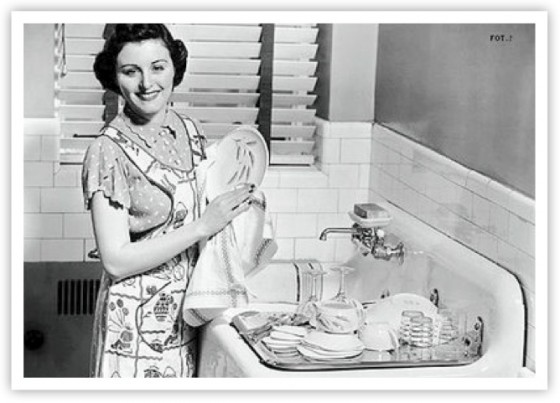
Washing-up-liquid bubbles are covering the greasy water, a hill of dirty dishes are lazily soaking in the sink, my hands are busily working in the water, trying to brush the dirt of the dishes.

My tormented mind is relaxed now: I don’t have to ask why I’m doing washing-up; what is the motivation and purpose behind my current action? In order to complete this task, I don’t have to ask myself questions about the meaning of life; how shall I find my most positive role in the world; whether my action represents the truth; whether it is honest; whether people will like me or hate me for it; whether it is only a part of a partly negative trend; whether it will influence the ‘world’ and how; whether I just want to do it because it is trendy; or if I could really dedicate my life for this and so on.

Washing-up saves me from my questions. Because washing up speaks the morality of the society around me: “Piri, great, finally you are a good girl, a useful member of the society, you know your responsibilities, finally you are not wasting your time, you do know your role and function, Piri you can follow the duty morality“.

Woman washing up

It is such a relief to get rid of my questions, because at the same time my tension, confusion, doubts, struggles, fears, my dreams, my aims and enthusiasm have also disappeared. I am standing in front of the sink, my hands soaking in the disgusting water, I am standing as ONE with the washing-up, as One with the washing-up-Piri, me becoming nothing else but the task of washing up.

I am in WASHING-UP PEACE. I am IN PEACE because I do something what I MUST do. I don’t have a choice – what a relief! I am IN PEACE because ‘must’ is called ‘the good’, ‘must’ is made into the ‘moral aim’ of our generalized duty-morality. I am IN PEACE because I let my doing and my motivation to be interpreted and determined by ‘the society’. I let ‘society’ to define me. I mean I interpret myself through ‘the society’-s moral. The peace of that relief! Standing in front of the kitchen-sink, relieved! In Harmony! Being ONE with what I am doing.

I do not normally allow myself to accept to this degree the norms and definitions created by others, or by ‘the society’ at large (norms of good and bad, definitions of the social and individual realities, concepts about possibilities, aims, and identifications of the problems). Not in any other activity feel I ever sure: that’s it! That is what I absolutely, definitely should do! There are endless questions and antagonistic attitudes and feelings about everything in my life and in my aimed-for-life, and these questions never seem to direct me towards becoming able to answer them. I can only find answer-fragments, which – when they are deep enough – only raise more questions. Often I suspect, my questions are not questions, their aim is not searching for answers, but the question itself states: there is NO answer. As if the question was the voice of my final desperateness, stating the impossibility of coming out of the whirlpool. Often there are not even questions, when the punctuality and articulating-ability needed for making questions is not reachable, when I am in a too foggy, dizzy, whirling state, somewhere underneath, underneath. In that state I can only produce pain-shoots, the content of which are the clear, desperate but non-articulate-able negations of whatever these pain-shoots are directed towards.

The main reason for that whirling-underneath-utterly-hope-less state might be a learned command: I should not be able to create anything really new, I should not be able to bring into realization my utopia, my dreams. It gives me two choices:

  1. Either I should give up my most beautiful aims and dreams, I should forget my vision of an emancipated individual and an utopian society, and to give up my plan to dedicate my life to the realization of both.

  2. Or alternatively I should try to find one individual, naturally a man (good looking too) who represents the same vision stronger, more articulated, and IS ABLE TO REALISE IT, to bring it to realization on Earth, or at least in the country where I am. I admit to my own romantic-revolutionary sexism. But I have it. The belief says: Piri, YOU can’t realize your dreams. You are not good enough for it. You are “only” a female. A little female. You were not born to do it.

I have understood long time ago, that the image of the Jesus-Christ-Che-Guevara, and the myth of the genius, the myth of the great artist, of the ‘great men’ is contra-productive. There is no corresponding tradition of the ‘great women’, although in my life I met much more fantastic women than men. One of the aim of the game is to put women down, and women are actively putting themselves down while admiring or searching for the great men.

Che Jesus

Despite this knowledge, I keep doing it. If I don’t watch it, I will end up with my hands in the sink of one of these great men. Getting rid of their dirt, not only mine.

Piroska Markus

(P.S. I wrote this sometimes in the early 1980’s. Che-Jesus image by Fausto Novelli.)